
China vs. Japan: The Strategic Race for AI Dominance in Asia
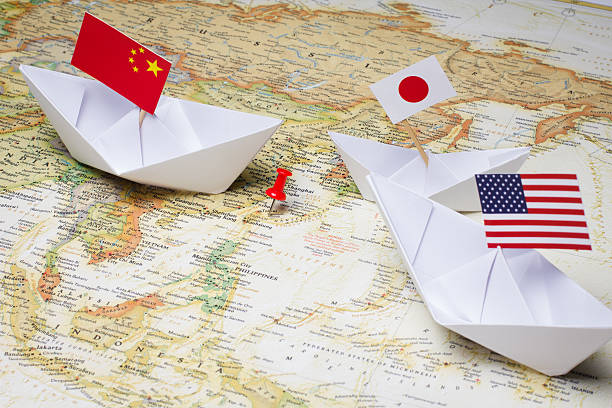
Asia stands as the definitive arena for the 21st century's most critical technological competition: the race for artificial intelligence supremacy. While multiple nations vie for position, China and Japan have emerged as the region's primary contenders, each pursuing starkly different strategic paths. This analysis examines their contrasting approaches, core strengths, and the potential implications for the future of global AI leadership.
Note: This examination is based on observable technological trends, policy frameworks, and market developments, and does not constitute a qualitative judgement on either nation.
China's AI Ascent: Scale, State Direction, and Speed
China's approach to AI is characterized by unprecedented scale, top-down strategic planning, and rapid commercial deployment, positioning it as a formidable force in the global landscape.
The Data Advantage: A Population-Scale Laboratory
China's most significant asset is its vast, digitally-connected population, creating a continuous stream of behavioral, social, and commercial data. This "data deluge" provides Chinese tech firms with a unique training ground for machine learning algorithms, particularly in areas like facial recognition, natural language processing, and predictive analytics.
Strategic State Backing: The 2030 Roadmap
The Chinese government's "New Generation Artificial Intelligence Development Plan" outlines a clear national strategy to become the world's primary AI innovation center by 2030. This is supported by massive public and private R&D investment, state-guided academic research, and policies that actively foster domestic tech champions while managing foreign competition.
The BAT Powerhouses: Integrated AI Ecosystems
Tech giants Baidu (AI & search), Alibaba (cloud & commerce), and Tencent (social & gaming) are not merely companies but sprawling ecosystems. They integrate AI across search, e-commerce, finance, smart cities, and autonomous systems, driving innovation from pure research to consumer application at breakneck speed.
Japan's AI Philosophy: Precision, Ethics, and Societal Integration
Japan counters China's scale-first model with a focus on robotic precision, stringent ethical frameworks, and a philosophy of human-centric technology that builds on its legacy of quality manufacturing.

Human-Centric and Ethical Design
Japanese AI development often prioritizes societal benefit, safety, and ethical considerations. Initiatives focus on AI for healthcare, eldercare, and disaster response, emphasizing reliability, transparency, and public trust over unchecked scalability.
The Keiretsu Collaboration Model
Innovation frequently stems from deep collaboration between established corporations (like Toyota, Sony, and SoftBank), prestigious national research institutes (e.g., RIKEN), and government ministries. This "all-Japan" approach fosters long-term, stable investment in foundational technologies and robotics.
Legacy of Precision Engineering and Robotics
Japan's world-leading expertise in robotics, sensors, and high-precision manufacturing provides a tangible edge in developing advanced physical AI—from industrial robots and autonomous vehicles to sophisticated humanoid assistants.
The Strategic Dichotomy: Contrasting Paths to Power
The competition reveals a fundamental strategic split:
- China's Path: Top-down, data-intensive, and commercially aggressive. It leverages scale and state coordination to achieve rapid market dominance and set global technical standards.
- Japan's Path: Collaborative, precision-oriented, and ethically-grounded. It focuses on high-value niches, superior hardware integration, and building technologies that earn global trust for their safety and quality.

Outlook: A Bifurcated Future of AI Leadership
The outcome is unlikely to be a single "winner." Instead, the global AI landscape is shaping up for bifurcated leadership:
China is poised to dominate in consumer AI applications, surveillance technology, and areas where vast data sets are crucial. Japan is likely to lead in industrial robotics, advanced manufacturing AI, and trusted AI systems for sensitive sectors like healthcare and infrastructure.
The true impact may lie less in direct competition and more in how these contrasting models influence global norms. Will the world adopt AI characterized by massive data collection and rapid iteration, or will it favor systems built on verifiable safety, ethical scrutiny, and precision engineering? Asia's tech race is, therefore, not just a contest for market share, but a battle for the very soul of our technological future.
As the race accelerates, the most significant development may be the emergence of a complementary, if competitive, duality. China's drive for scale and Japan's pursuit of quality represent two essential pillars of AI advancement. The nations that succeed in the coming decade may well be those that can learn to navigate the strengths of both approaches.