
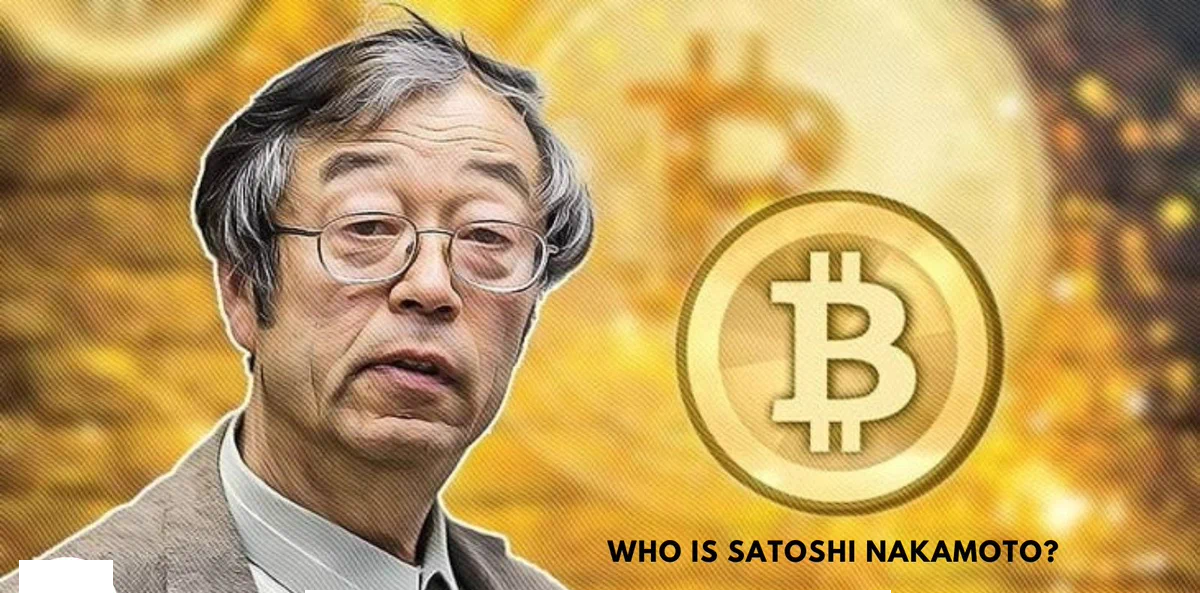
More Than Just a Name
You've probably heard the story. In 2008, as the world's financial pillars shook, a pseudonymous figure named Satoshi Nakamoto released a nine-page whitepaper. It proposed a "peer-to-peer electronic cash system" called Bitcoin. The idea was radical: money that belonged to the people, controlled by no government or bank. Then, after launching it, the creator vanished.
This mystery is often treated as a tech-world whodunit. But what if that's missing the entire point? What if the most important thing about Satoshi isn't who they were, but what they intentionally left behind—an open-source code, an unfinished revolution, and a set of questions we're still struggling to answer today?
The Genesis of a New Financial Logic

Satoshi's white paper solved a decades-old computer science problem called "double-spending": how to ensure a digital token can't be copied and spent twice without a central authority. The solution was the blockchain—a public, decentralized ledger verified by a network of computers ("miners").
This wasn't just a new kind of money. It was a new system of trust. For the first time, you could send value directly to someone anywhere in the world, at any time, with no bank as a middleman. The implications were staggering. It promised:
- Financial Sovereignty: Direct control over your assets.
- Censorship Resistance: Transactions that couldn't be blocked.
- Transparency & Security: A ledger visible to all and nearly impossible to falsify.
The Vanishing Act: A Masterstroke or a Mistake?
After two years of active development and correspondence, Nakamoto stepped away in late 2010, handing the reins to other developers. This final act of disappearing is as defining as the creation itself.
It was a masterstroke of decentralization. By leaving no single leader, Satoshi ensured no single point of control or failure. The project had to survive on its own merits, governed by its users. It prevented a cult of personality from forming around the technology.
But it also left a vacuum.
The Unintended Consequences: The Good, The Bad, and The Energy-Intensive
No vision unfolds perfectly. Bitcoin's path has been as volatile as its price.
| Impact | Description |
|---|---|
| The Catalytic Spark | Bitcoin ignited the entire cryptocurrency and blockchain industry, leading to smart contracts (Ethereum), DeFi (decentralized finance), and NFTs. |
| The Store-of-Value Narrative | For many, Bitcoin evolved from "digital cash" to "digital gold"—a hedge against inflation and traditional market instability. |
| The Environmental Debate | Bitcoin's "proof-of-work" mining consumes vast electricity. This has sparked a crucial global debate on sustainable innovation. |
| The Regulatory Tightrope | Governments grapple with regulating a borderless, decentralized asset. Is it a commodity? A security? New property? The rules are still being written. |
The Real Satoshi Nakamoto Is an Idea
Today, the search for a person is a distraction. The real Satoshi Nakamoto is the idea itself: that people can build and agree upon systems of value and trust without needing to trust any single person or institution.
This idea is Satoshi's true legacy. It challenges every CEO, entrepreneur, and policy-maker to think differently. It asks:
Can your business model be trustless? Can your community govern itself? What systems do we rely on that could be made more transparent, secure, and open?
Whether you see Bitcoin as the future of money or a speculative bubble, its underlying principle is now embedded in our technological consciousness. It proved that code can be a form of law and that a collective can maintain a system with profound financial stakes.
Looking Forward: The Code Continues
Satoshi's code was released, but the societal code is still being written. The questions Bitcoin raises are now our questions:
- How do we balance innovation with sustainability?
- How do nations regulate a global, decentralized network?
- Can this technology truly empower the unbanked, or will it widen existing gaps?
These aren't questions for a hidden founder to answer. They're for us. Satoshi Nakamoto gave the world a tool and a challenge. The mystery isn't in the past—it's in figuring out what we, the users, developers, and citizens of a digital age, are going to build with it next.