
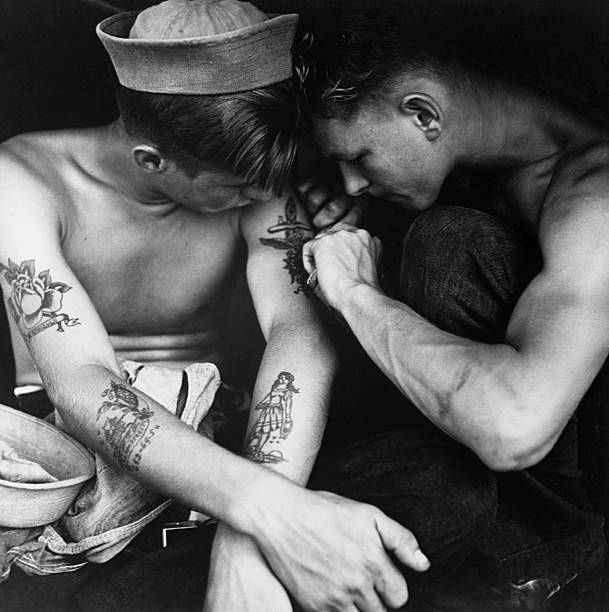
Today, getting inked is celebrated as the ultimate act of self-expression. It's framed as empowerment, art, and personal storytelling. But what if the relentless push to normalize tattoos has silenced a more honest conversation? What if, in our rush to embrace body art, we've stopped asking the hard questions about permanence, regret, and the hidden pressures of a trend-driven culture?
This isn't about judging individual choices. It's about challenging a one-sided narrative. For every story of meaningful ink, there's a quieter story of a $500 mistake being lasered off, a job opportunity lost, or a symbol that no longer fits the person wearing it. Let's talk about what the "body positivity" movement around tattoos often leaves out.
The Myth of "Just Art": When Skin Becomes a Billboard
The most common defense is, "It's just art on my body." But skin isn't a canvas. A canvas hangs on a wall; it can be taken down, repainted, or stored away. Your skin is you. It ages, stretches, and changes. That intricate design on a 25-year-old's forearm can become a blurred, greenish shadow by 65.
We treat tattoos as a form of self-expression, but rarely admit how often they're a form of social conformity. When every third person on the street, in the office, and on your Instagram feed has a sleeve or a subtle wrist tattoo, the "rebellious" act of getting one has vanished. It's become the norm. The pressure isn't to avoid tattoos anymore; for many, the subtle pressure is to get one to fit in, to seem creative, or to signal belonging to a particular group.
The Billion-Dollar Industry of Permanent Decisions
Let's follow the money. The tattoo industry is projected to be worth billions, fueled by social media showcase and celebrity influence. It's in the industry's direct interest to promote a narrative of pure, uncomplicated self-expression.
How often does a tattoo artist, whose income depends on your decision, have a deep conversation with you about the 50-year implications of that tattoo? About how it might look after pregnancy or significant weight loss? About the potential for inflammatory reactions or the challenges of future medical procedures like MRIs? The consultation often focuses on design and placement, not on the long-term medical or personal consequences of making a permanent change to the body's largest organ.

The Silent Epidemic of Regret and the Pain of Removal
Talk to any dermatologist specializing in laser removal. Their waiting rooms are full. The stories are often similar: a name of an ex-partner, a trendy symbol that lost its meaning, a poorly executed "bargain" tattoo, or simply a change of heart as one matures.
Laser removal is a testament to our changing selves. It's a painful, expensive, and often incomplete process—far more agonizing and costly than the original tattoo. The very existence of a booming removal industry is the silent, screaming counter-argument to the "no regrets" tattoo culture. It reveals a truth: we change. Our tastes, our relationships, our beliefs, and our priorities evolve. Why do we insist on etching symbols of our current self onto our future self?
The Professional and Social Repercussions That Still Exist
The mantra is "tattoos are accepted everywhere now." This is optimistic, but not universally true. While many workplaces have relaxed policies, biases—both explicit and implicit—still exist.
- Client-Facing Roles: In law, finance, high-end sales, and other conservative fields, visible tattoos can still be a career-limiting factor. The choice becomes: "Do I hide a part of my identity, or risk my professional advancement?"
- Cultural and Generational Judgement: In many families and cultural communities, tattoos carry a heavy stigma of rebellion, association with crime, or a lack of respect. This can create painful, lasting rifts.
- The Permanence of First Impressions: Like it or not, people judge. A face or neck tattoo sends an immediate, unchangeable signal before you speak a word.
A Call for Real Informed Consent, Not Just Trendy Positivity
The issue isn't tattoos themselves. The issue is the lack of a balanced, honest dialogue. The conversation has been monopolized by a celebration that often dismisses legitimate concerns as "judgmental" or "outdated."
Real empowerment means making decisions with eyes wide open. Before getting inked, ask yourself the harder questions:
- Is this truly for me, or is it influenced by the aesthetics of my social feed?
- Have I seriously visualized how this will look on my skin in 30, 40, or 50 years?
- Am I financially and emotionally prepared for the potential cost and pain of removal if I change my mind?
- Have I considered all potential professional and social ramifications in every sphere of my life?
Your body is not a trend. It's the one constant you will have for your entire life. Decorating it is a personal right, but it should come from a place of deep reflection, not just from the pressure of a culture that confuses popularity with progress. The most radical act of self-expression might just be the confidence to leave your skin as it is.